
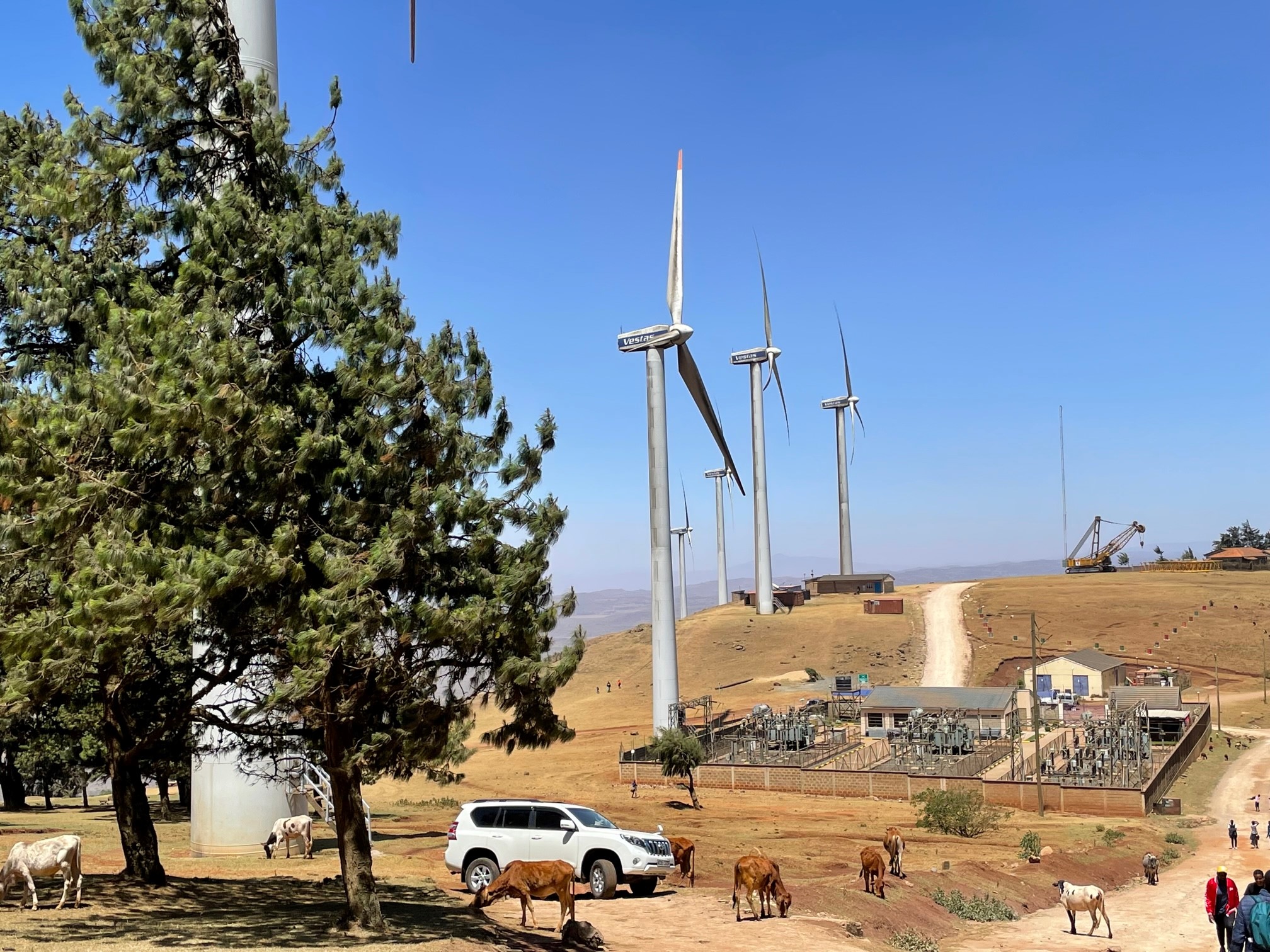
Concerns Raised Over the Proposed 60MW Wind Farm Project in Samburu, Kwale County
- Category: Policy Research & Analysis
- Date 30-01-2026
Renewable energy projects are central to Kenya’s transition toward a low-carbon and sustainable future. Wind energy, in particular, offers significant potential to diversify the national energy mix while reducing dependence on fossil fuels. However, the success and legitimacy of such projects depend heavily on strict adherence to environmental governance standards, especially the Environmental Impact Assessment (EIA) process. This principle is at the heart of concerns raised by the Kwale County Natural Resources Network (KCNRN), with support from the National Environment Civil Society Alliance of Kenya (NECSA-K) and WWF-Kenya, regarding the proposed 60-megawatt wind farm project in Samburu, Kwale County.
Kwale County Natural Resources Network (KCNRN) is a consortium of Civil Society Organizations (CSOs) and individuals spanning across Kwale County. The Network provides a platform for her members to articulate, lobby and advocate for issues on the environment and natural resources management. Following a three-day consultative meeting and a site visit conducted on 13 September 2022, the Network submitted a memorandum to the National Environment Management Authority (NEMA) highlighting serious deficiencies in the EIA Study Report submitted by the project proponent. This article examines some of the concerns raised by the consortium and the full and detailed memorandum can be read and downloaded here.
One of the most fundamental issues identified is the lack of site specificity in the EIA report. The document repeatedly makes references to unrelated sites, including Mombasa Cement Company premises and shoreline environments, despite the proposed wind farm being located over 50 kilometres inland. These inconsistencies strongly suggest extensive “cut-and-paste” practices, which directly violate Kenya’s EIA Regulations that require all assessments to be tailored to the unique environmental, social, and ecological characteristics of a specific project site.
Equally troubling are contradictory descriptions of the project’s purpose. While the EIA report states that the electricity generated will be fed into the national grid, technical staff from DEVKI Group - during the site visit - indicated that the power is intended solely for internal industrial use within the steel manufacturing process. This discrepancy raises critical questions about the project’s true scope, regulatory classification, and anticipated environmental impacts, all of which must be transparently disclosed for proper licensing.
The Executive Summary of the report was also found to be inadequate. It fails to comprehensively describe the project, lacks clarity on the project location, and does not provide a clear recommendation on whether the project should be licensed. Instead, it narrowly focuses on impacts and mitigation measures without contextual grounding, undermining its role as a concise yet complete overview of the proposed development.
Further scrutiny reveals substantial weaknesses across nearly all chapters of the report. No maps or GPS coordinates for the project site are given. The only coordinates given are the Longitude and Latitude for Kwale County as 40 10’ 28”S and 390 27’ 37” E. The policy, legal, and regulatory framework relies on outdated legislation, including repealed laws such as the Water Act, 2002 and the Energy Act, 2006, while omitting critical statutes like the Climate Change Act, 2016 and the Sustainable Waste Management Act, 2021. Moreover, the report fails to demonstrate how the proponent intends to comply with the applicable legal requirements.
The baseline environmental information is particularly deficient. The biodiversity assessment appears to have been conducted without qualified ecological expertise and contains species data consistent with coastal and riparian ecosystems rather than the dry inland environment of Samburu Sub-County and the ward (Samburu/Chengoni). This calls into question the credibility of the entire environmental baseline, which forms the foundation for predicting and mitigating project impacts.
Project design details, an essential requirement under the revised EIA Regulations, 2019, are largely absent. The report itself acknowledges that the wind farm layout and design are still at a preliminary stage, yet these details are crucial for assessing noise impacts, land use changes, visual intrusion, and cumulative environmental effects. Similarly, the analysis of project alternatives is incomplete, failing to consider a “no-project” option or alternative renewable technologies such as solar energy.
Public participation, a constitutional and statutory requirement in Kenya’s environmental decision-making, is also inadequately documented. The report lacks verifiable evidence of stakeholder consultations, such as signed attendance lists, meeting minutes, or photographic records, particularly from affected local communities and relevant government agencies.
Recommendations
Despite these serious shortcomings, KCNRN and NECSA-K emphasize that they are not opposed to the wind farm project itself. Rather, they argue that the granting of an EIA license should be contingent upon the submission of a comprehensive, professionally prepared Environmental and Social Impact Assessment (ESIA) report. Such a report must be developed by a multidisciplinary team and fully comply with Kenya’s environmental laws and regulatory guidelines.
Conclusion
Ultimately, the concerns raised underscore a broader principle: renewable energy development must not come at the expense of environmental integrity, legal compliance, and community trust. A robust, transparent, and credible EIA process is not a bureaucratic hurdle—it is the foundation of sustainable development.