
Civil Society Flags Major Gaps in ESIA for Proposed Elementaita Quarry Project
- Category: Policy Research & Analysis
- Date 30-01-2026
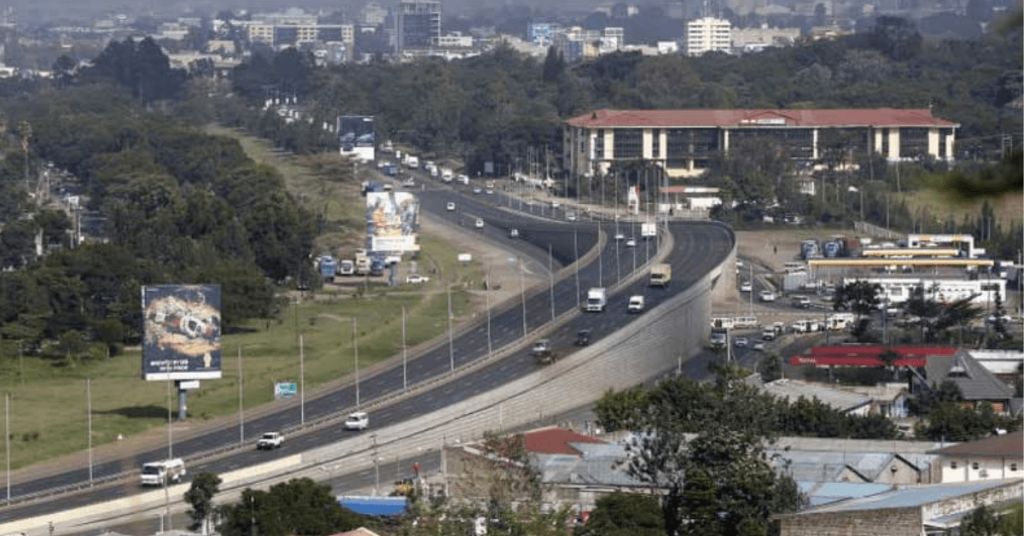
The proposed establishment of a quarry and contractor’s camp in Elementaita to supply materials for the Nairobi - Nakuru - Mau Summit Highway has drawn serious concern from environmental civil society actors. In a memorandum submitted to the National Environment Management Authority (NEMA) in April 2022, the National Environment Civil Society Alliance of Kenya (NECSA-K) raised extensive reservations about the adequacy, completeness, and credibility of the Environmental and Social Impact Assessment (ESIA) study report prepared for the project.
The umbrella body representing over 100 civil society organizations working in environment and natural resources management, acknowledges the national importance of the Nairobi - Nakuru - Mau Summit Highway in the memorandum filed to NEMA while emphasizing that the sourcing of construction materials - particularly through quarrying in ecologically sensitive areas such as Elementaita - must comply strictly with environmental and social safeguards. To this end, this article seeks to give readers an inside look at the memorandum whose detailed report can be downloaded here.
One of the Alliance’s primary concerns is the inadequacy of the project’s Executive Summary. The ESIA report narrowly focuses on quarrying activities while failing to comprehensively describe other key project components, including the asphalt plant, concrete mixing plant, crusher plant, and workers’ camp. Critical operational details, such as projected water consumption, electricity demand, and tree loss, are either missing or insufficiently addressed. In addition, the policy and legal framework section is incomplete, with limited reference to county legislation and relevant sectoral laws.
The project description section of the report has major omissions. NECSA-K notes that mandatory pre-construction studies, including geological and hydrological surveys, are not documented. While the proponent indicates plans to sink boreholes, no information is provided on their number, location, or potential impacts on groundwater resources. Furthermore, the report does not clearly explain how overburden material generated during quarrying will be managed or stored, nor does it provide site-specific maps for overburden storage and rehabilitation.
Vegetation clearance and excavation activities present additional concerns. The ESIA report proposes excavation depths ranging from 5 to 20 metres but fails to adequately assess the risk of groundwater contamination should these limits be exceeded. NECSA-K also highlights the lack of a comprehensive vegetation inventory, particularly given the project’s proximity to sensitive ecosystems and important bird areas associated with Lake Elementaita.
The Alliance further criticizes inconsistencies in project documentation. Multiple quarry sites are referenced without clear descriptions, site maps are inconsistent and not activity-specific, and tables outlining project components do not align with narrative sections of the report. The proposed project duration of 42 months is described as overly ambitious, raising questions about the realism of the implementation schedule.
Waste management is another area of concern. The report lacks a comprehensive inventory of products, by-products, and waste streams associated with quarrying, industrial processing, and camp operations. NECSA-K notes the reliance on soak pits for wastewater management without consideration of more sustainable alternatives, such as artificial wetlands. Effluent management is insufficiently addressed, posing risks to surface and groundwater resources.
From a legal and regulatory standpoint, NECSA-K finds the ESIA framework inadequate. Several critical laws, policies, and international conventions are omitted, including legislation on wetlands management, water resources regulation, gender equality, and local content requirements. The Alliance also calls for benchmarking against international environmental and social standards, particularly given the scale and sensitivity of the project area.
Public participation is identified as a major weakness. NECSA-K reports that consultation was limited, with very few community members engaged during the ESIA process. The memorandum stresses the need to build the capacity of local communities to meaningfully participate in project planning and implementation, rather than treating consultation as a procedural formality.
The environmental and social impact analysis sections are similarly criticized for being superficial. Impacts on vegetation, fauna, soil stability, air quality, noise, and water resources are either under-rated or inadequately analyzed. Notably, the project site lies along critical flamingo migratory routes and near Lake Elementaita, a recognized heritage and biodiversity area, yet this significance is insufficiently acknowledged.
While the Environmental and Social Management Plan (ESMP) includes key components, NECSA-K notes that it is poorly structured, lacks baseline data, and does not clearly assign responsibilities to relevant government agencies. Monitoring and audit plans are described as difficult to implement, and annexes referenced in the report are missing, limiting public scrutiny.
In its concluding observations, NECSA-K calls on NEMA to ensure full compliance with environmental regulations before granting approval. The Alliance emphasizes that quarrying activities must be based on project-specific data, robust baseline studies, meaningful public participation, and enforceable management plans. Without these safeguards, NECSA-K warns, the proposed Elementaita quarry poses significant risks to biodiversity, water resources, community livelihoods, and social wellbeing.